 English
 Bengali
 Gujarati
 Hindi
Hindi Kannada
 Malayalam
 Marathi
 Nepali
 Punjabi
 Sindhi
 Tamil
Tamil Telugu
 Urdu
Urdu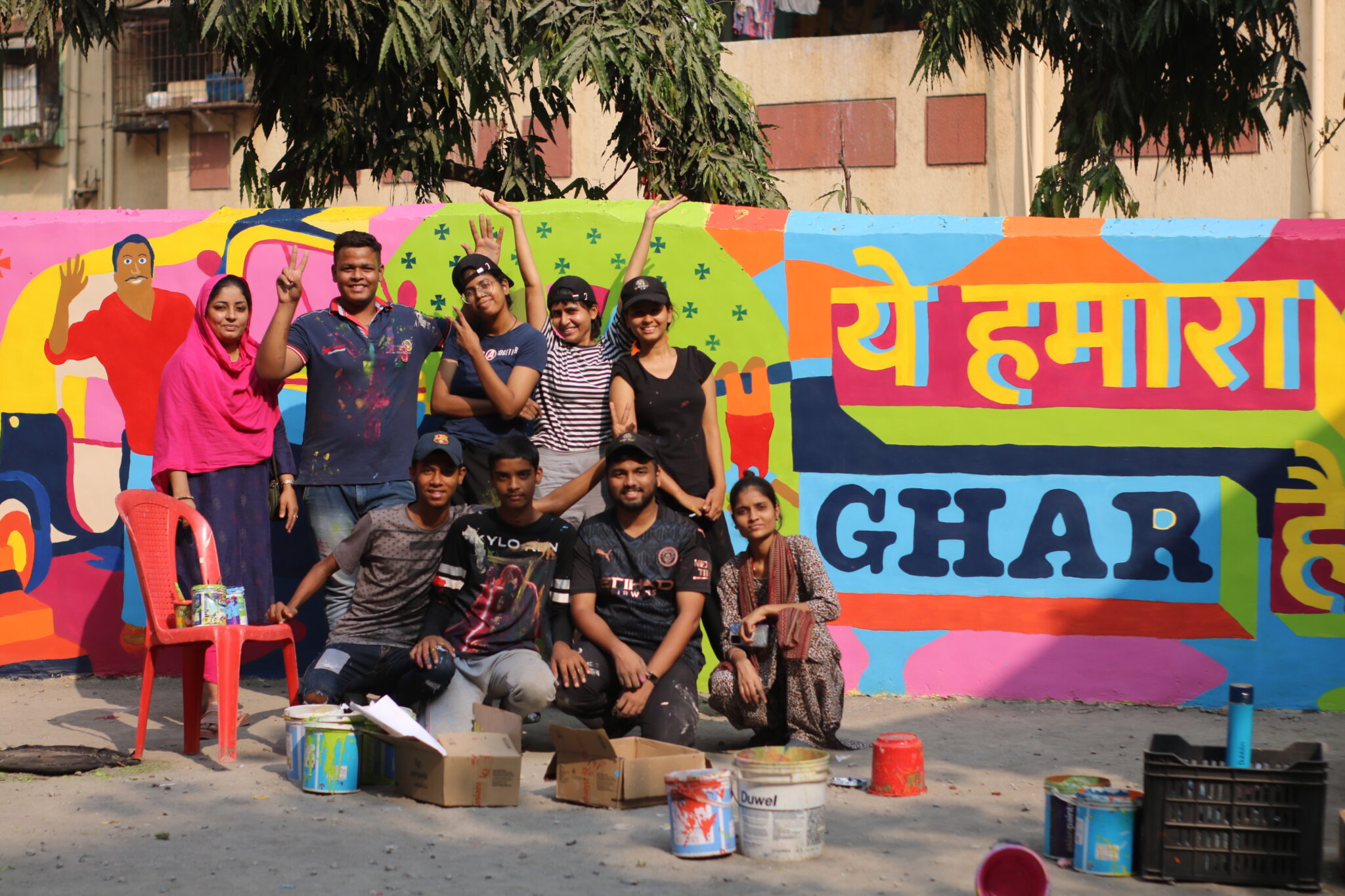
If you’re a Mumbaikar – or have ever been to Mumbai – chances are you’ve heard Govandi mentioned in the context of crime reports. A neighbourhood where people live, but are more often spoken about than spoken to. A place rarely held up as somewhere you’d proudly call home.
Today, if you type “Govandi” into a search bar, the results are shifting. Alongside stories of deprivation and danger, you now see rap performances, theatre stills, murals on public walls, and young people claiming space with their own words, their own sounds, their own presence.
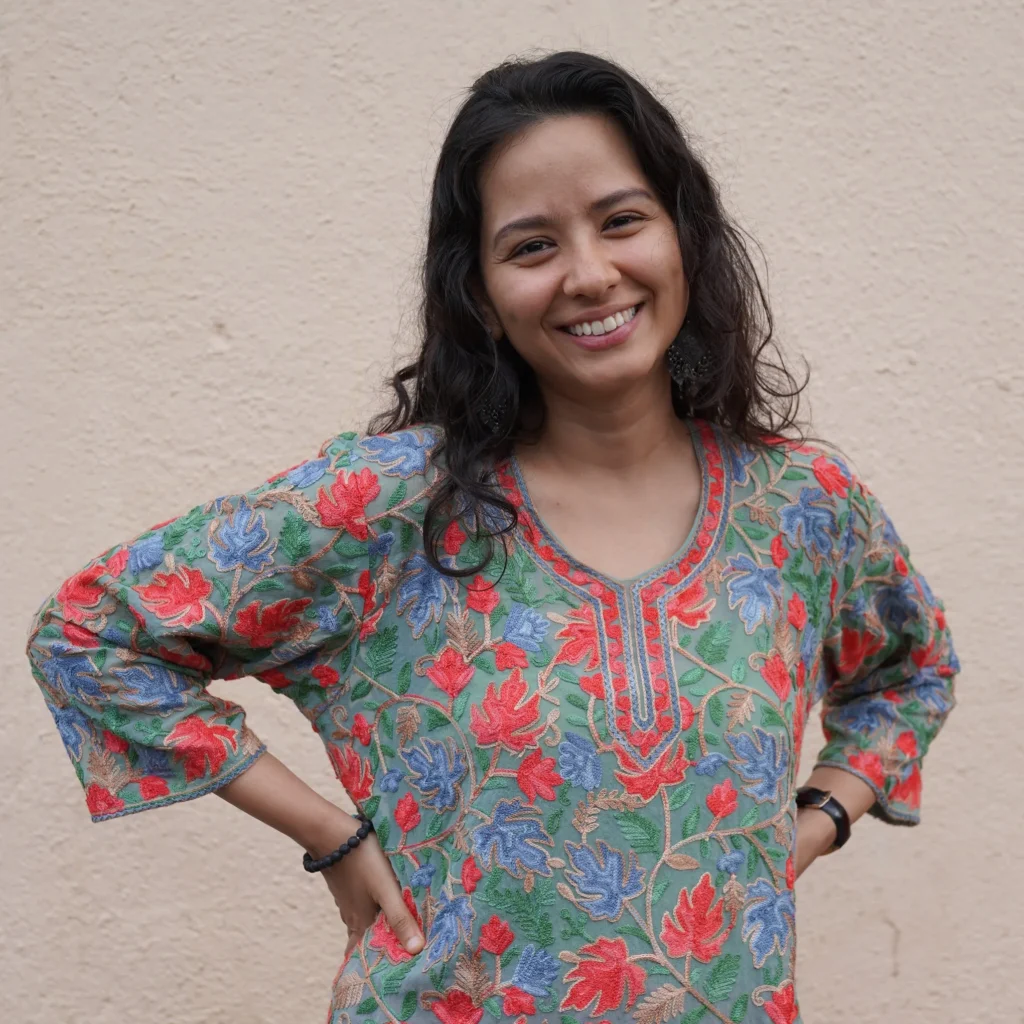
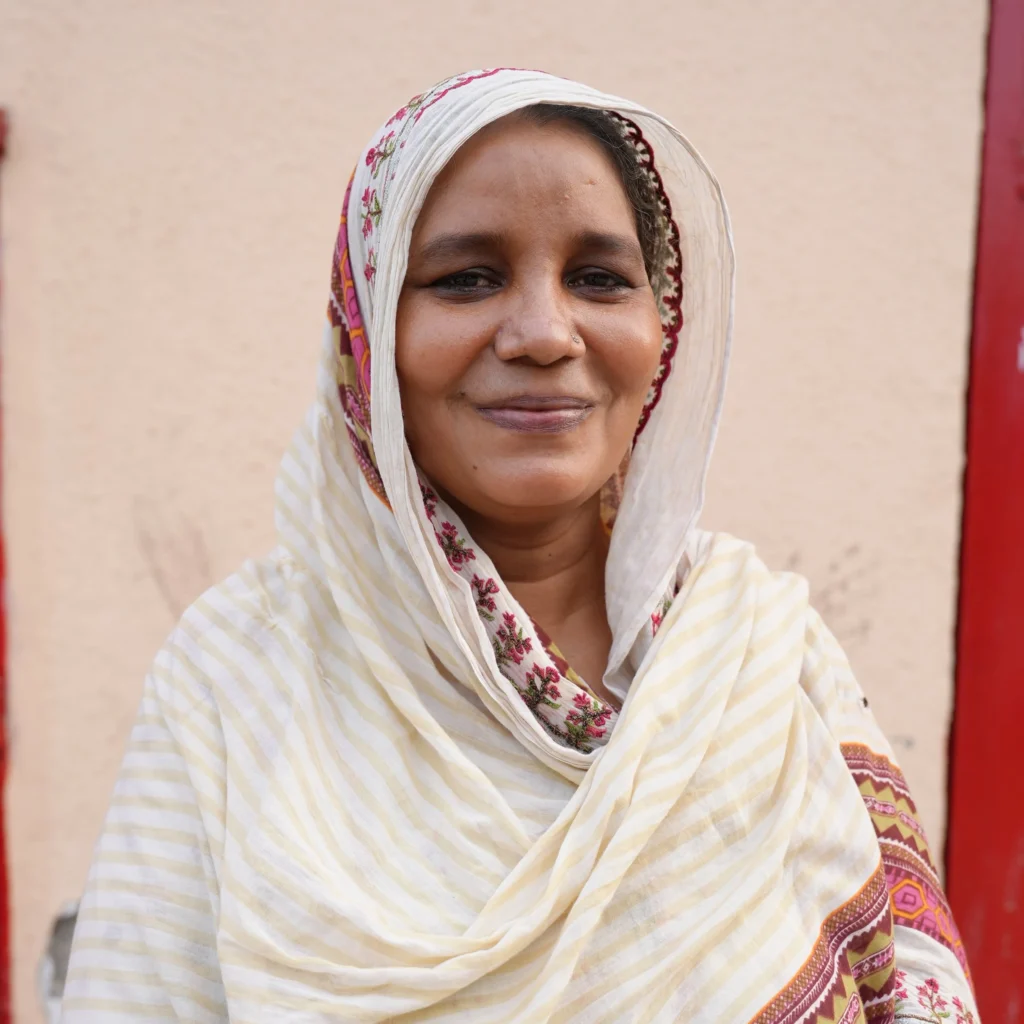
That shift isn’t accidental. It’s the work of Govandi Arts Festival, a community-rooted arts festival co-created with residents, artists and youth, and of people like Natasha Sharma, its curator and one of the driving forces behind it, and Parveen Shaikh, long-time resident, co-founder of the festival and director
“Library me aate hi log acche kyun ban jaate hain?”
For Natasha, the seed of this work began when a young girl once asked her, “Library me aate hi log acche kyun ban jaate hain?” (How is it that people become ‘good’ after they enter a library?)
It was an innocent question, but it carried a deep intuition, that spaces can change people. Those rooms filled with books, art, stories and quiet attention can alter how we feel, think, and act.
That question stayed with Natasha. It led to the creation of spaces where children and young people could experience that same kind of transformation, not just through books, but through photography, film, rap, music, theatre and visual arts.
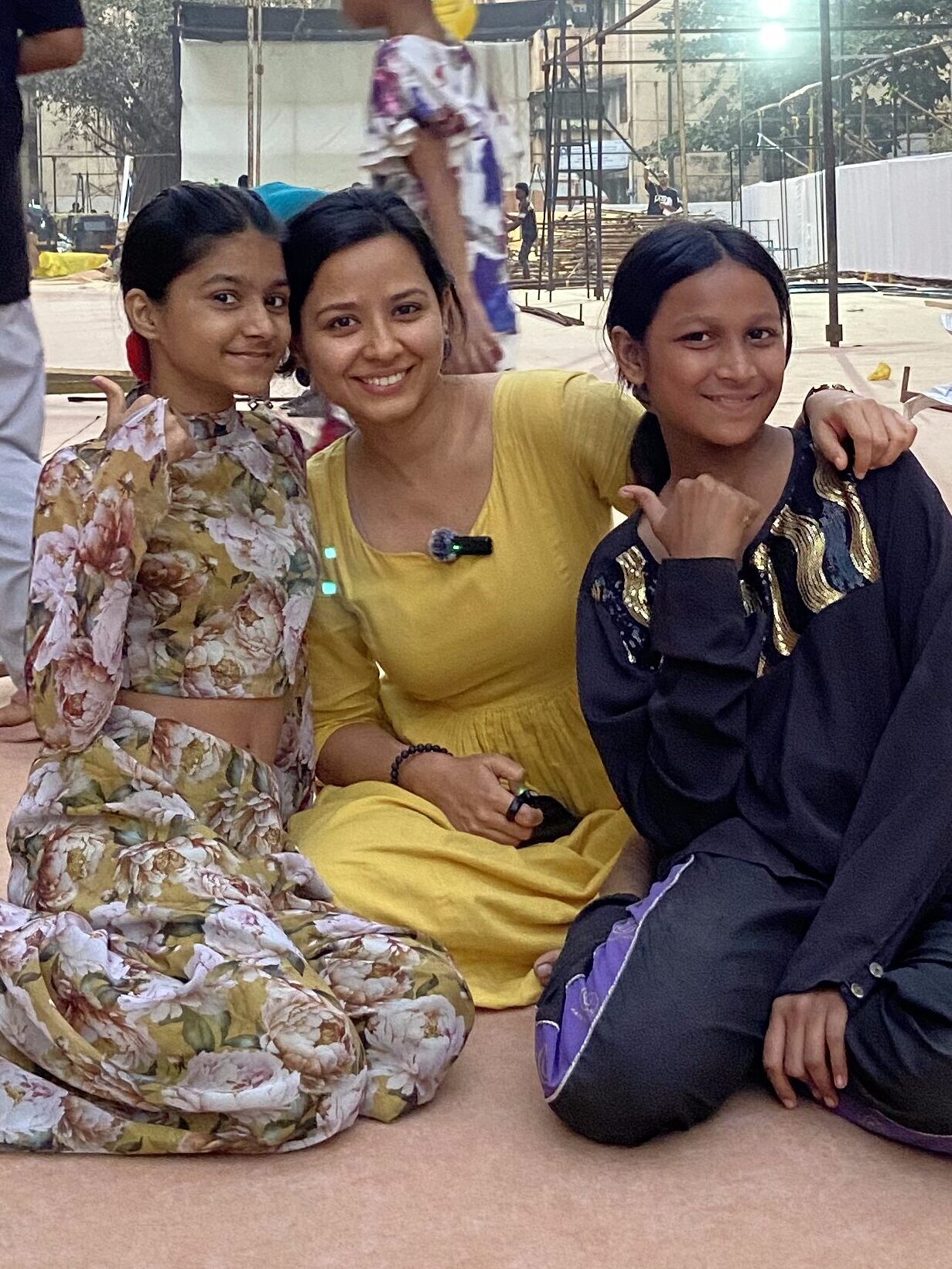
The first edition of Govandi Arts Festival was the first time they had attempted something on that scale in Govandi. It pulled together different art forms and generations, offering a glimpse of what a neighbourhood can become when it is allowed to express itself.
Over time, her understanding sharpened and she says that, “The festival is just a showcase. When you come to Govandi, the creative energy is the work. The youth are the work. They don’t come because someone forces them or because it’s a school period. They come because they have free time and they want to be there.”
You see kids coming in after school. Young people turning up between shifts. Residents not just questioning what’s wrong with the system, but taking part in small, steady acts of change through their own language: art.
The numbers tell one part of the story as the first edition started with 37 artists and this year there are more than 100 artists coming together to make this festival happen.
But the real shift is harder to measure: young people saying, “I am here, I want to do all this,” instead of being told who they are and what they’re allowed to become.
“Yeh itne pyaare bachche hain, koi kyun nahi karna chaahega art inke saath?”
The festival doesn’t just transform participants; it shapes the facilitators and collaborators too. When asked why he keeps coming back, Mohit Agarwal smiles and says that they’re drawn in by the atmosphere itself. “We come here because we want to be part of this tiny bit of energy that flows because of art. We know what this space holds, so of course we keep doing this. And mainly – yeh itne pyaare bachche hain, koi kyun nahi karna chaahega inke saath?” (These kids are so sweet – why wouldn’t you want to create art with them?).
Photography workshop lead Sanskar Sawant, now in his second year with the festival, adds another layer saying that, “Even though they’re cute, they’re blunt and they will ground you immediately if they don’t like something. You’re not a ‘teacher’ here. You’re someone who knows something, but you’re also someone who’s going to learn from them. There’s no superiority or hierarchy, so we take their feedback very seriously.”
This is the core ethic of Govandi Arts Festival: you don’t enter as an expert delivering culture. You enter as a collaborator, prepared to be questioned, challenged, and changed.
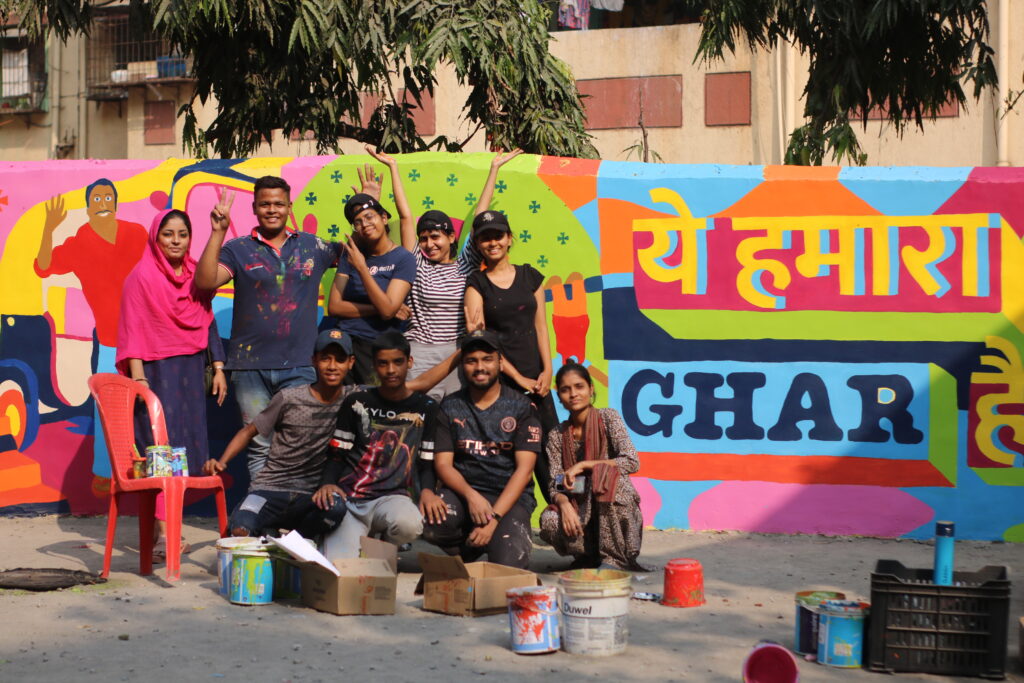
Public Space as Protagonist
Natasha returns again and again to the idea of public space, remembering a time when finding a place to “sit, chill and talk” was simple. Today, she observes, leisure has become a privilege. “Now the ones who have money have gardens and places to chill. But resting, playing, sitting with your community, that’s basic. And that happens in public space.”
For her and Parveen Shaikh, public space is nothing less than the protagonist of the city, “If you look at the public space, you understand the city’s reality, its well-being, its growth. Without public spaces, the city stays locked in apartments. Everyone is just working, going home, working. Where are you spending your life in between all this?”
The team’s work began with street clean-ups and reclaiming open grounds, but once the space existed, a deeper question followed:
If we’ve made the space, what will happen in it, and who decides? Natasha insists that a space is truly public only when it is created with the consent and participation of the people who live there. Adding to that Parveen puts it simply and powerfully, “I tell Natasha, through Govandi Arts Festival we have made an artist alive. We are so fortunate we don’t have to go to 20-year-old, 500-year-old books to find artists. We can see living artists right now, in front of us. Why wouldn’t people come to see living artists?”
It’s a stunning reversal. Govandi is no longer just a “case study” in academic reports or a shorthand for urban crises. It is a stage, a studio, a gallery, and the artists are very much alive, creating in real time and owning their very own space!

Why Does Art Matter?
People often ask, What difference does art make? Does it stop crime? Does it fix the system? Why invest in something that doesn’t give measurable results?
The answer isn’t a statistic. It’s space.
Art creates space!
A space to express.
A space to be heard.
A space where someone will listen without judgement.
Call the world small or call it vast. Say there’s no space left or that there is too much space. Either way, how we choose to use space is what changes everything.
And that’s what Natasha, Parveen, and hundreds of young people in Govandi are proving. They are speaking to the world through art, insisting that this neighbourhood is not just a place associated with crime statistics or discarded narratives.
It is a place where art is born. This is not just a festival. It is a living, breathing practice of belonging without bias, a celebration of possibility, dignity and authorship.
And most importantly, it is a reminder that everyone deserves space; space to imagine, space to create, space to change their own story, space to take up space.
Do not miss the festival check out more details about festival here.
If you want to read more articles about festivals like Ziro, Jodhpur RIFF, Short + Sweet check out our blog section and keep an eye out on Instagram for timely update.
Share on