 English
 Bengali
 Gujarati
 Hindi
Hindi Kannada
 Malayalam
 Marathi
 Nepali
 Punjabi
 Sindhi
 Tamil
Tamil Telugu
 Urdu
Urdu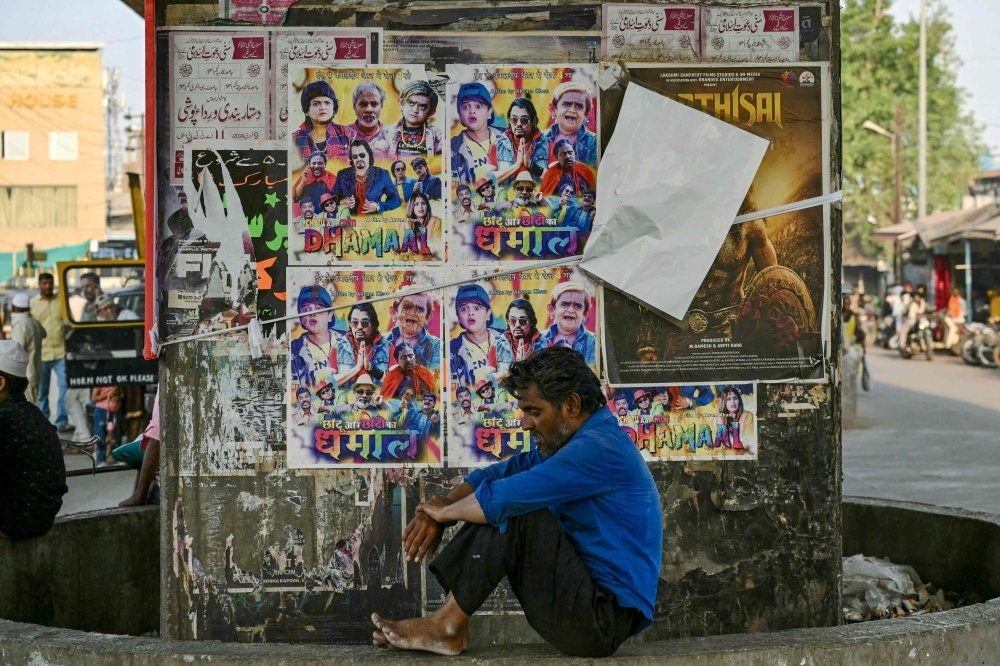
When cinema first arrived in India in the late nineteenth century, it did not come with fixed theatres or formal audiences. It appeared in tents, town halls, borrowed rooms, and private gatherings. Films were watched collectively, sometimes informally and often intimately, long before cinema became an organised industry.
Since then, Bollywood has taken over commercial cinema in the country with films like Rang De Basanti and Queen. On the other hand, regional industries are producing impressive films like Natarang, Aarpar, Ponniyin Selvan, Bad Girl, The Great Indian Kitchen, Kumbalangi Nights and much more. In this era of Netflix and chill, theatre culture is battling streaming platforms, rising ticket prices and how can we forget the popcorn GST. This has contributed greatly to a culture of collective viewing in independent spaces that push the boundaries of where a film can be collectively watched and who gets to decide what is screened.
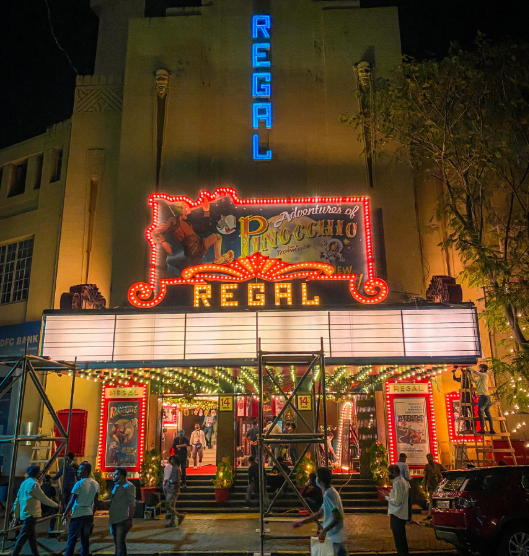
Source: Regal Cinema, Architectural Digest
Today, Indian cinema exists across a wide spectrum that extends far beyond mainstream theatres. Independent cinema circulates through festivals, private screenings, cine-clubs, college auditoriums, libraries, cafes, and pop-up venues. Film festivals sit at the centre of this ecosystem, not only as exhibition platforms, but as meeting points where independent cinema finds its audience.
That culture of collective viewing never disappeared. It evolved.
Across regions, festivals such as The Bhopal Film Festival and Aravali International Film Festival ground cinema in place, shaped by local histories and social realities. The Ajanta-Ellora International Film Festival situates contemporary global cinema within a landscape of deep cultural memory, reminding us that new stories are often experienced alongside old ones.
When cinema risks becoming transactional, independent festivals reclaim the act of intentional viewing. The Dharamshala International Film Festival and the Mumbai Independent Film Festival continue to champion films made outside commercial systems, sustaining a long lineage of Indian independent cinema that has relied on film societies, private screenings, and word-of-mouth audiences since the parallel cinema movement. These spaces function much like extended movie clubs, where watching a film is inseparable from conversation.
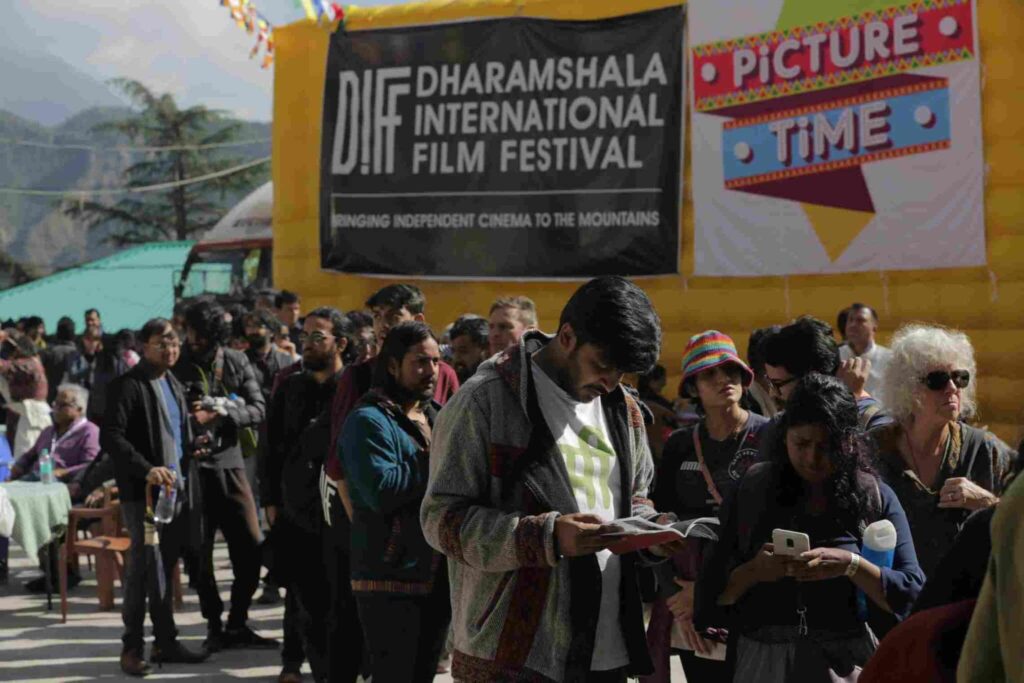
Source: Dharamshala International Film Festival
Language remains central to this culture. Festivals such as Avakai and Ritu Rangam Film Festival foreground regional storytelling, reinforcing the fact that Indian cinema has always been multilingual. Many of these films first find life through small, community-based screenings before reaching larger platforms. Language here is not a limitation, but an assertion of identity.
Visibility has often depended on alternative circuits. Queer film festivals such as KASHISH 2025 Film Festival and Colors of Love Queer Film Festival carry forward the legacy of safe, private screenings into public and celebratory spaces. These festivals are not only about representation, but about building communities where cinema becomes a shared language of recognition and care.
Other festivals expand cinema’s responsibility to the world it inhabits. The All Living Things Environmental Film Festival and EcoReels Film Festival respond to the ecological crisis by making environmental realities visible and urgent. The Science Film Festival carries forward cinema’s early educational impulse, using film to translate complex ideas into shared public knowledge. In these spaces, the screening is only the beginning, conversation and action follow.
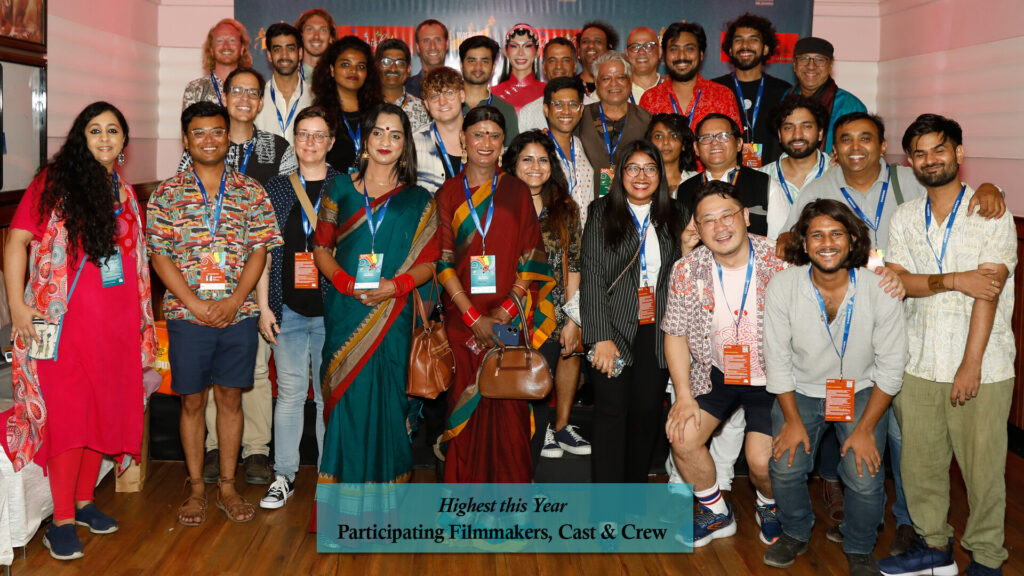
Source: Filmmakers and crew at the 2025 KASHISH Pride Film Festival
Cinema has always crossed borders through informal routes. Parda Faash, a two-day festival of films from South Asia, brings together stories shaped by shared histories and fractured geographies. Many of these films have travelled first through private screenings, cine-clubs, and activist networks before reaching festivals, reflecting a long tradition of cross-border cinematic exchange.
Form, too, finds new life through independent platforms. AniMela places animation at the centre of the cinematic conversation, challenging the idea that certain forms are peripheral. Like many independent movements, animation in India has grown through workshops, niche audiences, and community screenings before finding wider collective expression.
It is worth remembering that cinema in India has always survived through collectives. Through people who create spaces to watch, listen, and reflect together. Festivals do not replace this culture. They amplify it.
Explore the film festivals and independent platforms shaping cinema across India. Discover them on Festivals From India and find where cinema is still being watched together.
If you want to read more articles about festivals like Ziro, Jodhpur RIFF, Short + Sweet check out our blog section and keep an eye out on Instagram for timely updates.
Share on